Who Actually Vouched for This Group? A Plainer Case for Verification
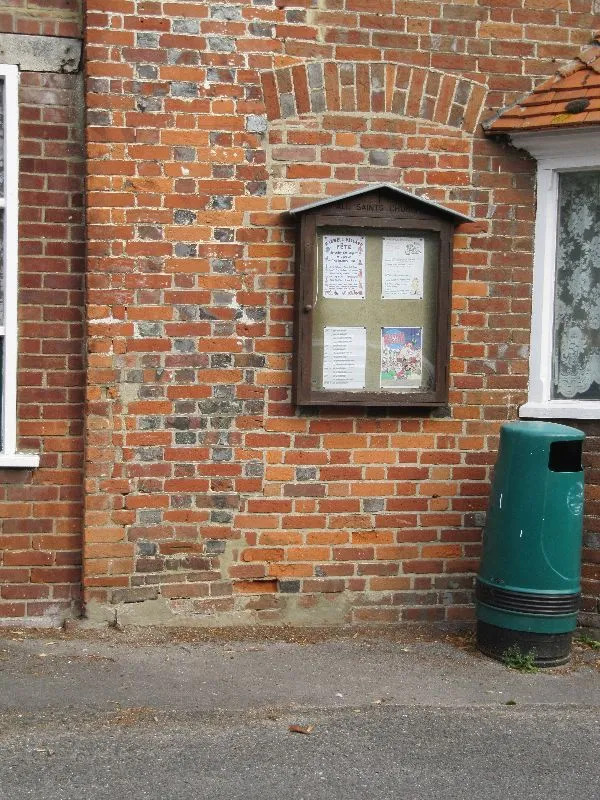
Photo: Bill Nicholls , CC BY-SA 2.0, via Wikimedia Commons
There is a food bank near me that operates out of a church side room two mornings a week. It has no website worth the name, a Facebook page run by a retired teacher, and absolutely no verification badge anywhere. It is also one of the most trusted institutions in the town. People know the retired teacher. They know which door to knock on.
Meanwhile, a group with a tick and a slick landing page can appear in a search result and mean nothing at all. That gap is the thing worth fixing.
What the tick currently proves
On most large platforms, verification began as a way to confirm that a notable account was the account it claimed to be. It has since drifted. In some places it is a subscription. In others it is an application process judged against unpublished criteria. In community-adjacent tools, it is often bundled into a paid tier as a feature, alongside custom colours and analytics.
The result is that a badge now signals one of three things, and you cannot tell which:
- somebody paid for it,
- somebody filled in a form,
- somebody at the platform made a judgement call.
None of those tell a resident whether the group collecting for a family's funeral costs is genuine, or whether the "official" neighbourhood watch page is run by anyone with a role in anything.
Three questions a badge should answer
The problem is not that badges are bad. It is that they answer the wrong question. A useful mark in local community tech should make three things visible without a click:
Who vouched? A named person or organisation, not a logo. "Verified by Ansty Parish Council" is a claim that can be tested. "Verified" is not.
What did they check? Legal status, a bank account in the organisation's name, a phone call to a listed number, a visit to a physical address. These are different levels of assurance and should be labelled as such.
When? Trust decays. A check from four years ago, before a committee changed hands, is not the same as one from last month. A date costs nothing to display and tells you whether to bother.
The voucher model, borrowed from the real world
Community organisations already understand this. A bank account needs two signatories. A grant application needs a referee. A hall booking needs a keyholder. Nobody expects one person's word to be enough on its own.
Digital verification could work the same way. A group gets a named voucher, the voucher's own affiliation is visible, and the chain stops somewhere accountable. If a group turns out to be collecting money under false pretences, there is a person who can be asked why they put their name to it.
That is uncomfortable, which is why platforms avoid it. But discomfort is precisely the point. Anonymous verification is just a sticker.
A trust page any group could publish
You do not need a platform to do this. A single page, written plainly and linked from every post, does more than a tick ever will.
Who we are Ansty Community Larder. A volunteer-run food project operating from the side room of Ansty Methodist Hall since 2019.
Who is accountable Chair: [name], reachable on [number] between 9am and 6pm. Treasurer: [name]. Both are residents of the village and have been since before the group started.
What we are An unincorporated association. We are not a registered charity and we do not claim to be. Our accounts are read out at the annual meeting each March and are available on request.
Money We bank with [bank]. The account is in the group's name and requires two signatories. We do not collect donations by direct message, ever.
Who checks us Ansty Parish Council confirms we hold the hall booking. The Methodist Hall trustees confirm our insurance. Neither of these bodies endorses our work; they simply confirm the facts above.
Last reviewed 15 November 2026.
The page is unglamorous. It is also more informative than anything a blue tick has ever told me.
What this costs
The argument against this model is always time. Volunteers are tired, and asking a parish clerk to confirm a hall booking is another email in a full inbox.
But compare it to the alternative. Every scam that borrows a community's name does damage that takes months to repair, and the cost lands on the same volunteers. A short, dated, named confirmation is cheap next to a fraud investigation and a town full of people who no longer trust the collection tin.
There is a role here for platforms too, and it is not prestige. Build the field. Let a group enter a voucher's name, a contact route and a review date, display it in plain text next to the group name, and expire it automatically. That is a database column, not a product tier.
The badge worth wearing
Local community tech has spent a decade borrowing credibility signals from social media and getting the wrong ones. Followers, ticks, engagement. None of them tell you whether the person behind the page is who they say they are, and none of them survive a change of committee.
A named voucher and a recent date will not make a group look impressive. They will make it checkable. In a village of four hundred people, checkable is worth considerably more than impressive.