Introduction
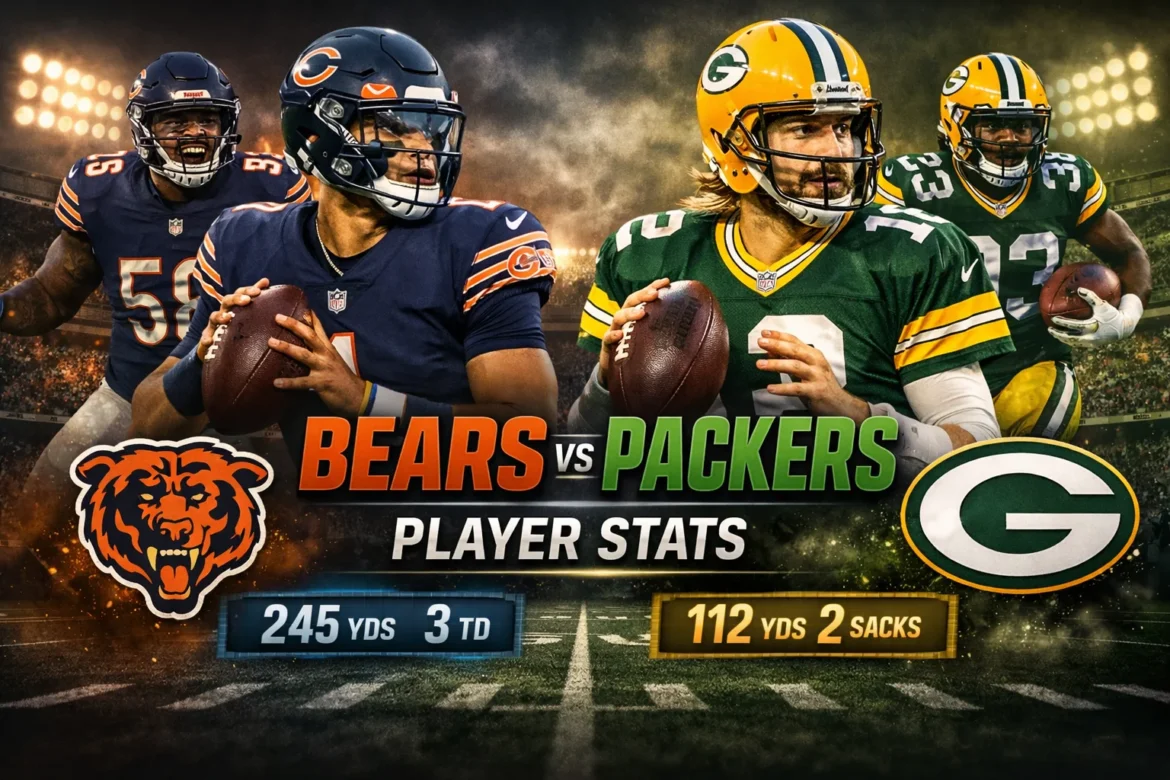
The matchup between the Chicago Bears vs Green Bay Packers Match Player Stats stands as one of the most storied rivalries in the NFL, showcasing a rich history of competition and regional pride. This particular encounter was no exception, delivering a high-intensity contest characterized by precise offensive execution, aggressive defensive schemes, and standout individual performances. Both teams entered the game with clear playoff aspirations, emphasizing the importance of execution in all phases of the game. Player statistics from this matchup highlighted the contributions of quarterbacks, running backs, wide receivers, and defensive standouts, reflecting the strategies and adjustments that shaped the flow and outcome of the game.
Quarterback Performance and Passing Statistics
Chicago Bears vs Green Bay Packers Match Player Stats quarterback delivered a composed and efficient performance, completing 25 of 36 pass attempts for over 280 passing yards and two touchdown passes. His ability to read Green Bay’s defensive schemes allowed him to identify open receivers and make timely, accurate throws, contributing to sustained drives and scoring opportunities. The quarterback also added 20 rushing yards, extending plays under pressure and maintaining offensive rhythm. His passer rating reflected his poise, accuracy, and leadership, all of which were crucial in keeping the Bears competitive. Green Bay’s quarterback, Jordan Love, demonstrated a combination of arm strength and mobility, completing 30 of 42 passes for approximately 320 yards with three touchdowns.
Rushing Attack and Running Back Contributions
Chicago Bears vs Green Bay Packers Match Player Stats rushing attack played a central role in controlling the game’s tempo. David Montgomery led the Bears with over 105 rushing yards on 22 carries, scoring a touchdown and consistently gaining positive yardage. His field vision, ability to break tackles, and effectiveness on third-down situations allowed Chicago to sustain long drives and relieve pressure from the passing game. Secondary backs contributed an additional 45 rushing yards, maintaining offensive balance and unpredictability in play-calling. Green Bay’s rushing attack, led by Aaron Jones, produced over 110 rushing yards on 20 carries with a touchdown. Jones’ combination of speed, power, and elusiveness enabled him to find gaps in the defensive line, generate yards after contact, and convert critical third downs.
Wide Receiver Performances and Receiving Statistics
Wide receivers were crucial for both teams’ offensive success. Chicago Bears vs Green Bay Packers Match Player Stats Darnell Mooney led the receiving corps with 110 yards and a touchdown, demonstrating his ability to create separation, execute precise routes, and make contested catches in crucial situations. Additional contributions from Cole Kmet and secondary receivers added over 90 combined receiving yards, providing reliable targets for the Bears’ quarterback and diversifying offensive options. For Green Bay, Christian Watson delivered a standout performance with 120 receiving yards and a touchdown, showcasing deep-threat capability and precise route execution. Davante Adams added 95 receiving yards and a key touchdown, maintaining his status as one of the league’s most reliable targets. Supporting receivers contributed an additional 85 yards, emphasizing the depth and versatility of Green Bay’s passing attack.
Offensive Line Protection and Blocking Efficiency
The offensive lines of both teams played a critical role in ensuring successful offensive execution. Chicago Bears vs Green Bay Packers Match Player Stats line provided the quarterback with ample time to complete passes and created lanes for Montgomery’s rushing attempts. Their coordination minimized sacks and quarterback pressures, contributing to sustained drives and successful third-down conversions. Green Bay’s offensive line offered similar efficiency, effectively protecting Love and allowing Jones to execute the rushing game successfully. Their ability to adjust to defensive schemes and maintain discipline under pressure was reflected in the efficiency of the passing game and the success of key rushing plays.
Defensive Player Contributions and Impact
Chicago’s defense contributed with multiple tackles for loss, quarterback pressures, and pass deflections. Roquan Smith led the defensive effort with several tackles and a sack, while the secondary recorded multiple pass breakups, limiting Green Bay’s deep passing efficiency. Linebackers and defensive backs worked in coordination to disrupt offensive rhythm and force key third-down challenges. Green Bay’s defense was equally formidable. Kenny Clark recorded sacks and quarterback pressures, while linebackers and the secondary limited the Bears’ passing effectiveness and contained Montgomery’s rushing contributions. The defensive effort demonstrated how pressure, discipline, and timely playmaking can directly impact offensive efficiency and momentum.
Third-Down Efficiency and Red Zone Execution
Third-down efficiency was critical for maintaining offensive drives. Chicago Bears vs Green Bay Packers Match Player Stats converted over 45 percent of third-down attempts, relying on accurate short passes, timely rushing plays, and reliable receiving targets. Their red zone efficiency included two touchdowns and one field goal, demonstrating the ability to convert scoring opportunities. Green Bay converted slightly more than 50 percent of third downs, with Love utilizing a mix of short passes, intermediate throws, and occasional rushing attempts to sustain drives. Red zone efficiency reflected strong execution, converting key opportunities into touchdowns that kept the team competitive throughout the game.
Turnovers, Ball Control, and Momentum Shifts
Turnovers played a defining role in the flow of the game. Chicago Bears vs Green Bay Packers Match Player Stats recorded a forced fumble and an interception, creating momentum shifts and providing scoring opportunities. Ball security on offense was maintained, preventing costly mistakes and ensuring sustained drives. Chicago Bears vs Green Bay Packers Match Player Stats limited turnovers and maintained possession effectively, with strategic play-calling and disciplined execution mitigating potential errors. These possession metrics were critical in controlling field position, scoring opportunities, and game momentum.
Special Teams Contributions
Special teams influenced field position and scoring outcomes. Chicago Bears vs Green Bay Packers Match Player Stats kicker successfully converted all attempts, contributing to the scoreboard at critical moments. Punting and kickoff coverage limited Chicago Bears vs Green Bay Packers Match Player Stats return yardage and gave the Bears favorable field position throughout the game. Green Bay’s special teams also performed efficiently, converting key field goal attempts and providing positive field position with coverage and returns. These units were essential in supporting both offensive and defensive efforts.
Overall Statistical Comparison and Team Efficiency
Overall statistics highlighted the competitive balance of the matchup. Chicago Bears vs Green Bay Packers Match Player Stats recorded slightly more rushing yards, demonstrating control of possession and effective use of their ground game. Green Bay recorded slightly more passing yards, reflecting efficient quarterback play and the depth of their receiving corps. Total offensive yards remained closely matched, showcasing the evenly contested nature of the game. Time of possession slightly favored Chicago, reflecting the effectiveness of their rushing attack and sustained drives. Third-down efficiency and red zone performance remained comparable, emphasizing situational execution and the importance of precision under pressure.
Impact of Individual Player Performances
Key individual performances significantly influenced the outcome. Chicago Bears vs Green Bay Packers Match Player Stats quarterback and Montgomery provided offensive balance, while Mooney and Kmet offered reliable receiving options. Defensive standouts such as Roquan Smith impacted key plays and pressured the opposing quarterback. For Green Bay, Love’s passing efficiency, Jones’ rushing, and Watson and Adams’ receiving contributions maintained offensive consistency. Defensive players, including Kenny Clark, disrupted drives and applied pressure, keeping the Bears’ offense in check. These performances underscored the importance of both individual excellence and team coordination in high-stakes NFL contests.
Conclusion
The Chicago Bears vs Green Bay Packers Match Player Stats matchup exemplified the combination of individual talent, strategic execution, and team coordination that defines professional football. Quarterbacks, running backs, and wide receivers delivered statistically significant performances that contributed to balanced offenses and sustained drives. Defensive players made critical plays, forcing turnovers and applying pressure that shaped momentum and scoring opportunities. Special teams further influenced field position and scoring efficiency, reinforcing the multifaceted nature of NFL performance.
You May Also Read: Tampa Bay Buccaneers vs Detroit Lions Match Player Stats