Introduction
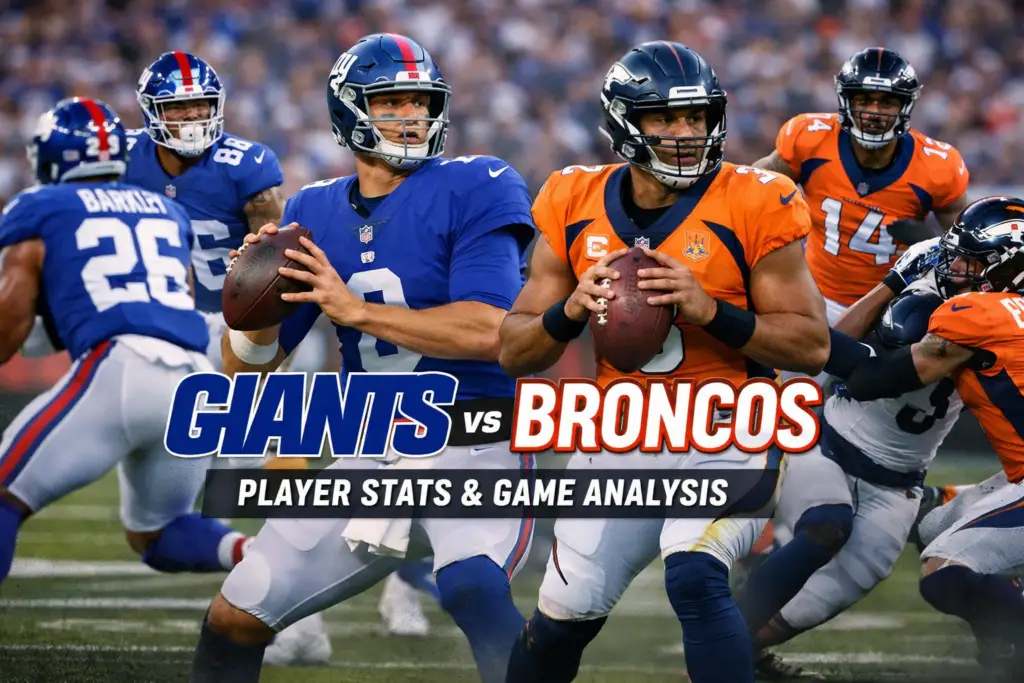
The matchup between the New York Giants vs Denver Broncos Match Player Stats always draws attention from fans of the National Football League. Both franchises possess rich histories and passionate supporters, and when they meet on the field the contest often turns into a fascinating tactical battle. In this game, the focus was not only on the final score but also on the individual player statistics that shaped the outcome. From quarterback efficiency to defensive stops and special teams contributions, the performance of each player provided insight into how the contest unfolded. By examining the passing numbers, rushing yards, receiving totals, defensive tackles, and turnovers, one can clearly understand how the Giants and Broncos approached the game and how individual performances impacted momentum throughout the match.
Quarterback Performance and Passing Statistics
Quarterbacks remain the centerpiece of modern NFL offenses, and this game showcased the leadership and skill of Daniel Jones for the New York Giants vs Denver Broncos Match Player Stats and Russell Wilson for the Broncos. Daniel Jones entered the game determined to demonstrate improved passing accuracy and better decision-making. Throughout the matchup he showed strong pocket awareness, completing several key passes that moved the chains and sustained offensive drives. Jones accumulated solid passing yardage while delivering multiple touchdown passes, showing confidence when targeting receivers in tight coverage. Although both quarterbacks produced respectable numbers, the effectiveness of their supporting players ultimately determined how productive their offenses became during critical phases of the game.
Running Game and Rushing Leaders
The running game played a vital role in controlling the tempo of the contest. For the New York Giants vs Denver Broncos Match Player Stats star running back Saquon Barkley delivered an energetic rushing performance. Barkley’s combination of speed, agility, and vision allowed him to break through defensive gaps and gain valuable yardage. Several of his runs resulted in first downs that kept the Giants’ offense on the field and prevented the Broncos from gaining momentum. Barkley’s rushing statistics reflected both consistency and explosive potential, as he produced multiple runs that significantly shifted field position. On the Broncos’ side, Javonte Williams served as the primary rushing option. Williams displayed strength and determination while pushing through the Giants’ defensive line for tough yards.
Wide Receivers and Key Targets
Wide receivers often determine whether a quarterback’s performance translates into meaningful yardage and scoring opportunities. For the New York Giants vs Denver Broncos Match Player Stats, Darius Slayton and Sterling Shepard emerged as important targets for Daniel Jones. Slayton demonstrated impressive speed on deep routes, stretching the Broncos’ secondary and creating space for intermediate passes. His receptions included several significant yardage gains that helped push the Giants into scoring territory. Sterling Shepard contributed with reliable hands and precise route running. Shepard’s ability to find openings in the defensive coverage allowed Jones to convert key third-down situations. Together, Slayton and Shepard played vital roles in sustaining offensive drives and building momentum for New York.
Defensive Standouts and Key Tackles
While offensive statistics often receive the most attention, defensive performances were equally important in this matchup. For the New York Giants vs Denver Broncos Match Player Stats, defensive tackle Dexter Lawrence anchored the defensive line with an impressive display of strength and awareness. Lawrence recorded several tackles and applied pressure on Russell Wilson, disrupting the New York Giants vs Denver Broncos Match Player Stats’ offensive rhythm. Another standout defender for New York was Kayvon Thibodeaux. The talented edge rusher used his speed to challenge Denver’s offensive tackles and generate quarterback pressure. Thibodeaux’s sacks and tackles for loss proved crucial in forcing the Broncos into difficult third-down situations.
Turnovers and Game-Changing Moments
Turnovers often shape the outcome of football games, and this matchup featured several pivotal moments involving changes of possession. The New York Giants vs Denver Broncos Match Player Stats’ defense managed to intercept a pass from Russell Wilson during a crucial drive, halting Denver’s progress and shifting momentum toward New York. This turnover allowed the Giants’ offense to capitalize on favorable field position and add points to the scoreboard. Later in the game, the Broncos responded by forcing a fumble during a rushing attempt by Barkley. Recovering the ball provided Denver with an opportunity to close the scoring gap and regain control of the game’s tempo. These turnovers highlighted how quickly momentum can change in professional football and how defensive awareness can influence final outcomes.
Special Teams Contributions
Special teams units also played a meaningful role in the overall statistical story of the game. The New York Giants vs Denver Broncos Match Player Stats’ kicking unit delivered accurate field goals that contributed valuable points and maintained pressure on the Broncos. Punt coverage teams worked effectively to limit New York Giants vs Denver Broncos Match Player Stats return yardage and ensure favorable field position for New York’s defense. The Broncos’ special teams group demonstrated solid execution as well. Punt returners managed to gain extra yards that helped shorten the field for their offense, while the kicking unit successfully converted field goals that kept Denver within competitive range throughout the match.
Offensive Line Performance and Protection
The effectiveness of both teams’ offensive lines played a significant role in determining the success of their quarterbacks and running backs. The New York Giants vs Denver Broncos Match Player Stats’ offensive line showed improved pass protection, allowing Daniel Jones the time necessary to read defensive coverages and deliver accurate throws. Their blocking also created running lanes that enabled Barkley to produce consistent rushing gains. The Broncos’ offensive line faced a challenging task against the Giants’ aggressive pass rush. While they succeeded in protecting Wilson on several drives, they also struggled at times to contain New York’s defensive pressure. Despite these difficulties, Denver’s linemen managed to maintain enough stability to support Williams’ rushing efforts and sustain several offensive drives.
Coaching Strategy and Tactical Adjustments
Coaching decisions significantly influenced the flow of the contest. The Giants’ coaching staff emphasized a balanced offensive approach that combined Barkley’s rushing ability with Jones’ passing efficiency. This strategy helped keep the Broncos’ defense uncertain about whether to prioritize stopping the run or defending against deep passes. Denver’s coaching staff focused on maximizing Wilson’s experience and leadership. Their offensive strategy involved quick passing plays designed to neutralize the New York Giants vs Denver Broncos Match Player Stats’ pass rush. By spreading the ball among multiple receivers, the Broncos attempted to exploit gaps in New York’s defensive coverage. These tactical adjustments from both teams illustrated how coaching decisions can shape player statistics and overall game outcomes.
Statistical Comparison Between Both Teams
When comparing the overall statistics from the game, both teams demonstrated strengths in different areas. The New York Giants vs Denver Broncos Match Player Stats showed slightly higher rushing yardage thanks to Barkley’s consistent performance, while the Broncos remained competitive in passing yardage through Wilson’s steady production. Defensively, New York recorded more quarterback pressures and sacks, indicating their success in disrupting Denver’s offensive rhythm. Meanwhile, the New York Giants vs Denver Broncos Match Player Stats excelled in pass coverage and managed to limit several deep passing attempts by the Giants. These statistical comparisons reveal how closely contested the game was and how both teams relied on a mix of offensive creativity and defensive resilience.
Impact of Star Players on the Final Result
Star players inevitably shape the narrative of any NFL matchup. Saquon Barkley’s explosive runs and Daniel Jones’ steady passing played crucial roles in the New York Giants vs Denver Broncos Match Player Stats’ offensive success. Their combined efforts provided the consistency necessary to maintain control of the game’s tempo. For the Broncos, Russell Wilson’s leadership and Courtland Sutton’s receiving ability ensured that Denver remained competitive until the final moments. Defensive contributions from Patrick Surtain II also demonstrated the Broncos’ ability to challenge high-powered offenses. The performances of these key players illustrate how individual talent can influence not only statistical outcomes but also the emotional intensity of a game.
Conclusion
The New York Giants vs Denver Broncos Match Player Stats delivered a compelling display of professional football, highlighted by impressive player statistics and strategic gameplay. Quarterbacks Daniel Jones and Russell Wilson led their respective offenses with determination, while running backs Saquon Barkley and Javonte Williams provided balance through powerful rushing performances. Wide receivers from both teams contributed significant yardage, and defensive standouts such as Dexter Lawrence, Kayvon Thibodeaux, and Patrick Surtain II ensured that the contest remained fiercely competitive.
You May Also Read: Kansas City Chiefs vs Denver Broncos Match Player Stats