The Sentence Test: Why UK Groups Keep Arguing About Tools Instead of Purpose

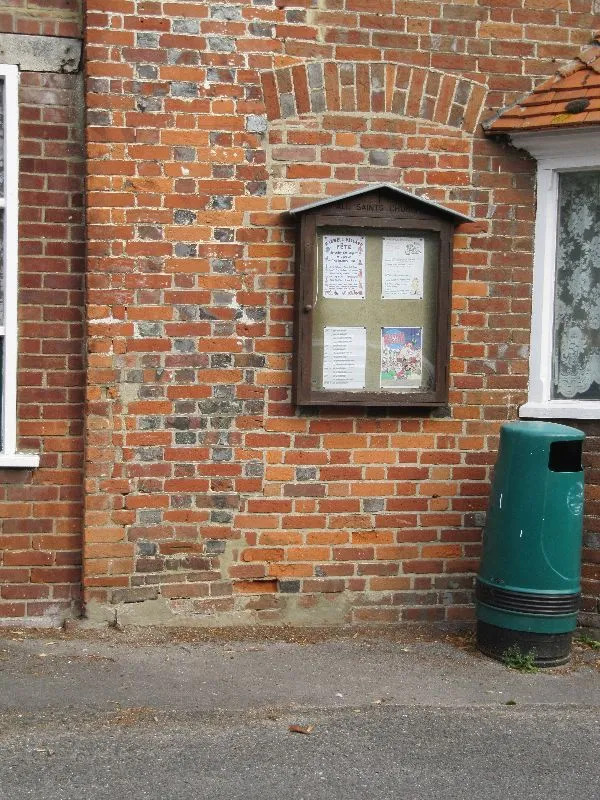
Photo: B722N, CC BY-SA 4.0, via Wikimedia Commons
The argument last month was about notifications. Should the group ping everyone for a lost cat, or only for official notices? It ran for two days, involved forty-one messages, and ended with the same person threatening to leave that always threatens to leave.
Next month the argument will be about a second app. Then it will be about whether the committee can delete a comment that is rude but not quite rule-breaking.
These look like three separate disputes. They are one dispute, wearing three coats.
Nobody can say what the group is for
Ask five members of a typical UK community group what it exists to do and you will get five answers. One thinks it is a noticeboard. One thinks it is a social space. One thinks it is a support network. One thinks it is a place to sell a bike. The fifth just wants to know when the bins go out.
That is not a membership problem. It is a document problem. The group has never written down, in plain words, what it is for — so every decision becomes a negotiation about identity, conducted by people who are all partly right.
The one-sentence rule
Here is the proposal, and it is deliberately unglamorous: your group should be describable in one sentence that a member can repeat from memory, without looking it up.
Not a mission statement. Not a values framework. One sentence, in the sort of language people actually use.
A useful shape is: we do [what] for [whom] so that [why it matters].
For an allotment society: We keep the plots in good order and share tools and know-how so that growing food here stays possible for people without a shed full of kit.
For a primary school PTA: We raise money and organise events so that the school can afford the extras the budget does not cover.
For a neighbourhood watch: We pass on trustworthy local information quickly so that people know what is actually happening on their street.
Notice what none of them contain. No 'vibrant'. No 'hub'. No 'engaging our community'. Those words are the residue of a template, and they do not settle a single argument.
Three tests you can run this week
The school gate test. Read your sentence to a member in the car park. If they cannot paraphrase it back within about ten seconds, it is too long or too abstract.
The newcomer test. Drop it into your welcome message and see what new members ask next. Good sentences stop questions; bad ones generate them.
The descoping test. Take each thing the group currently does and ask whether the sentence covers it. If it does not, you have found something you are doing out of habit. That does not mean stop — it means decide, deliberately, whether to add it to the sentence or let it go.
That third test is the uncomfortable one. Most groups are carrying three or four activities that nobody chose, inherited from a previous committee, and which consume a surprising amount of admin time.
What one line actually settles
Notifications. If you exist to pass on trustworthy local information quickly, then a lost-cat post belongs and a meme does not. The rule writes itself.
Moderation. If the point is speed and reliability, then a misleading post is a bigger problem than an impolite one. Your rules start to reflect your purpose rather than your founder's personal threshold for rudeness.
Tool sprawl. People keep adding apps because each one solves a problem nobody has defined. Once you know what you are for, you can ask whether the fourth platform earns its place — and the answer is usually no.
Sponsorship and money. A group that knows why it exists can say no to a donation with conditions attached, and can explain the refusal without it becoming a row.
The split question. Whether to stay in one big chat or break into smaller ones stops being about personalities and becomes a practical question about which structure serves the sentence.
What it will not do
It will not end disagreement, and it should not. It will not replace your rules of engagement, your moderation policy or your insurance. And it cannot be written by one person in a quiet room and imposed at the next meeting — that is how you get a sentence nobody repeats.
Write a draft, then test it on the people who will have to live with it. Expect to lose a clause. The version that survives contact with real members is the one worth keeping.
Put it where people trip over it
A purpose statement hidden in a document nobody opens is decoration. Put it in the group description. Put it at the top of the pinned post. Put it in the welcome message, the AGM agenda, and on the poster in the hall porch. Say it out loud at the start of meetings, briefly, the way you would read the minutes.
Then treat it as a living thing. Review it at the AGM — once a year, in a scheduled slot, not in the middle of a crisis. Groups change. The sentence should change with them, slowly and on purpose.
Because the alternative is what most groups already have: a purpose that exists only in the heads of whoever happens to be admin this year, and an argument about notifications that never quite ends.