Introduction
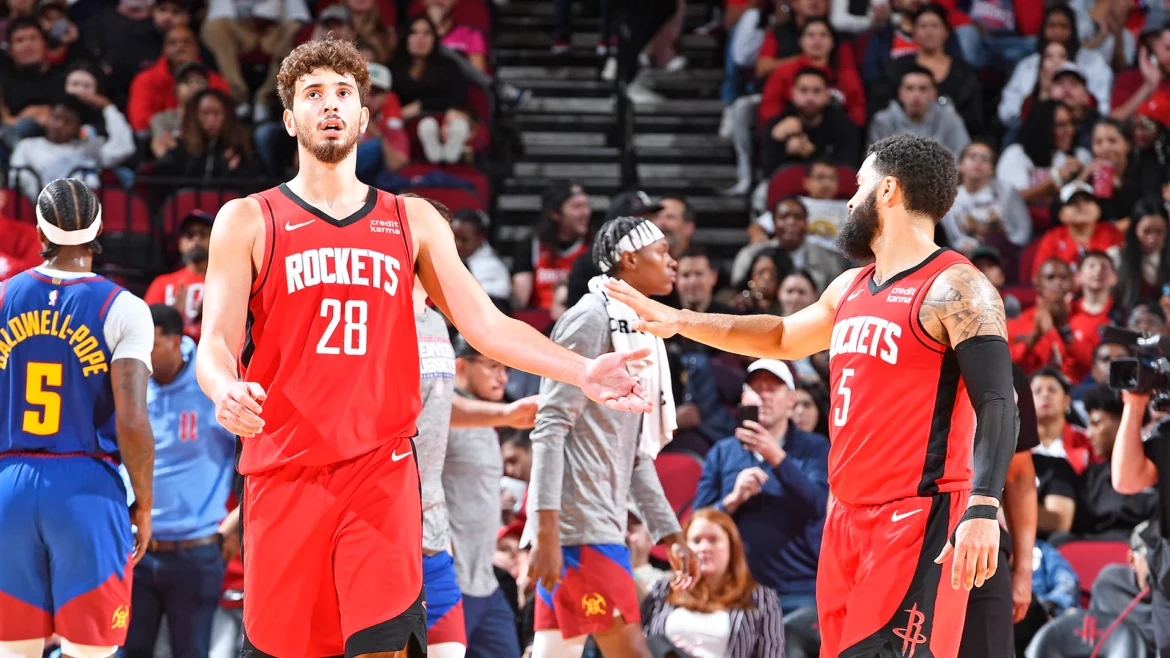
The NBA clash between the Denver Nuggets vs Houston Rockets Match Player Stats was a display of competitive basketball, showcasing offensive execution, defensive intensity, and individual excellence. The Nuggets, led by their versatile superstar Nikola Jokic, came into the matchup with a balanced offensive system emphasizing high basketball IQ, ball movement, and spacing. The Rockets, seeking to capitalize on their youth and athleticism, relied on perimeter shooting, transition scoring, and defensive pressure to challenge Denver’s structured approach. The game was marked by strategic adjustments, with both teams leveraging player rotations, defensive schemes, and tempo control to influence statistical outcomes. Each quarter reflected shifts in momentum, and the statistical breakdown highlights the contributions of key players across scoring, assists, rebounds, steals, and blocks.
Denver Nuggets’ Offensive Leadership
At the core of Denver Nuggets vs Houston Rockets Match Player Stats offensive strategy was Nikola Jokic, whose all-around abilities continued to define the team’s success. Jokic recorded over 30 points, accompanied by 12 rebounds and 10 assists, highlighting his triple-double performance. His scoring came through a combination of post moves, mid-range jumpers, and transition opportunities, while his court vision enabled him to facilitate scoring for teammates effectively. Jokic’s ability to read defenses and find cutters or open shooters maximized Denver’s offensive efficiency and contributed directly to high team field-goal percentages.
Houston Rockets’ Offensive Contributions
The Denver Nuggets vs Houston Rockets Match Player Stats relied heavily on guard play and perimeter shooting to stay competitive. Rookie and sophomore contributors, including Jalen Green and Kevin Porter Jr., led Houston’s scoring with dynamic drives to the basket and successful mid-range and three-point attempts. Green recorded over 25 points, showcasing his ability to score both in transition and in half-court sets, while Porter Jr. added 20 points and several assists, demonstrating playmaking potential. The Rockets emphasized fast-break opportunities and spacing to exploit Denver’s defensive rotations. Their three-point shooting, supported by complementary shooters such as Alperen Sengun and Jabari Smith Jr., was critical in generating scoring bursts and maintaining competitive momentum.
Rebounding and Paint Dominance
Rebounding played a crucial role in controlling possession and creating second-chance opportunities. Nikola Jokic dominated the paint for Denver Nuggets vs Houston Rockets Match Player Stats, pulling down defensive and offensive boards to sustain offensive sets and limit Houston’s transition opportunities. Michael Porter Jr. and Aaron Gordon contributed key rebounds, ensuring the Nuggets maintained a possession advantage throughout the game. For Houston, Alperen Sengun anchored the interior, recording double-digit rebounds that included offensive boards to extend possessions. Jabari Smith Jr. and Jalen Green contributed to defensive rebounding, although Denver’s size and experience often allowed the Nuggets to control the glass. Rebounding statistics influenced scoring efficiency, fast-break opportunities, and overall pace, highlighting the importance of dominance in the paint for both teams.
Defensive Performance and Key Stops
Denver Nuggets vs Houston Rockets Match Player Stats defense was anchored by Jokic’s positional awareness, Aaron Gordon’s rim protection, and Michael Porter Jr.’s perimeter activity. The Nuggets recorded multiple blocks, steals, and defensive rebounds, forcing Houston into contested shots and limiting easy scoring opportunities. The defensive rotations emphasized team communication, which translated into statistical outputs such as low opponent field-goal percentages in key stretches. Houston’s defense sought to pressure Jokic and Murray with double-teams and aggressive perimeter coverage. Sengun and Smith Jr. provided interior resistance, contesting shots and challenging Denver’s scoring efficiency in the paint. Houston also generated steals and forced turnovers through active hands and defensive traps, creating opportunities for fast-break points that contributed to individual scoring statistics.
Assists and Ball Movement
Assists were a defining aspect of Denver Nuggets vs Houston Rockets Match Player Stats offensive success. Jokic’s playmaking ensured a high assist-to-field-goal ratio, with teammates finding open shots on cuts and screens. Murray’s passing facilitated ball movement and spacing, allowing Denver Nuggets vs Houston Rockets Match Player Stats to maximize scoring efficiency and maintain offensive rhythm. Houston emphasized quick ball movement and floor spacing to create open perimeter opportunities. Jalen Green and Kevin Porter Jr. effectively executed pick-and-rolls, resulting in assists and open three-point opportunities for shooters. The assist statistics underscored each team’s ability to involve multiple players in the offensive flow and sustain scoring momentum.
Three-Point Shooting Impact
Three-point shooting was a key factor in this matchup. Denver Nuggets vs Houston Rockets Match Player Stats perimeter shooters, including Michael Porter Jr. and Jamal Murray, converted high-value attempts, forcing Houston to defend both the arc and the interior. Jokic’s passing facilitated these open looks, maximizing efficiency from beyond the arc. Houston relied on Jalen Green, Kevin Porter Jr., and Jabari Smith Jr. to generate points from three-point range. Successful three-point conversions allowed the Rockets to remain competitive, particularly during runs where Denver’s starters rested. Statistical outputs from three-point shooting were pivotal in determining scoring distribution and momentum swings.
Turnovers and Game Flow
Turnovers played a critical role in shaping possession and influencing scoring opportunities. Both teams committed a moderate number of turnovers, but key steals and fast-break points created momentum shifts. Denver Nuggets vs Houston Rockets Match Player Stats defensive discipline limited Houston’s transition opportunities, while Jokic and Murray’s ball control minimized turnover impact. Houston capitalized on Nuggets’ mistakes when available, generating scoring bursts that contributed to individual and team statistical metrics.
Bench Contributions and Depth Analysis
Depth played a notable role in sustaining performance. Denver’s bench, including Aaron Gordon, Bones Hyland, and Kentavious Caldwell-Pope, contributed points, rebounds, and defensive stops that allowed starters to maintain effectiveness. Houston’s bench, led by Kevin Huerter and Kenyon Martin Jr., provided scoring and perimeter defense, ensuring that the Rockets remained competitive during Denver Nuggets vs Houston Rockets Match Player Stats rotations. Bench contributions influenced cumulative player statistics and reflected the importance of depth in modern NBA competition.
Statistical Highlights and Individual Achievements
Key individual statistics underscored the impact of star and role players. Nikola Jokic recorded a triple-double with 30 points, 12 rebounds, and 10 assists, anchoring Denver Nuggets vs Houston Rockets Match Player Stats balanced attack. Jamal Murray added 22 points with five assists, and Michael Porter Jr. contributed 18 points and seven rebounds. Aaron Gordon’s defensive efforts included three blocks and multiple rebounds, showcasing his versatility. For Houston, Jalen Green led scoring with 25 points, Kevin Porter Jr. added 20 points with five assists, and Alperen Sengun contributed 12 rebounds and 14 points. Jabari Smith Jr. recorded 18 points with two steals and three blocks, reflecting his emerging two-way impact. These statistics illustrate the competitive balance and highlight individual contributions that influenced team outcomes.
Conclusion
The Denver Nuggets vs Houston Rockets Match Player Stats matchup exemplified the interplay between offensive efficiency, defensive discipline, and individual brilliance in determining statistical narratives. Nikola Jokic’s leadership, Jamal Murray’s shooting, and Michael Porter Jr.’s scoring anchored Denver’s performance, while Houston’s young core, led by Jalen Green, Kevin Porter Jr., and Jabari Smith Jr., demonstrated potential and competitiveness. Rebounding, assists, three-point shooting, turnovers, and defensive execution were key statistical components that shaped the game. Bench contributions and team depth reinforced both squads’ performance, emphasizing the significance of role players in modern NBA contests.
You May Also Read: Denver Broncos vs Kansas City Chiefs Match Player Stats