Introduction
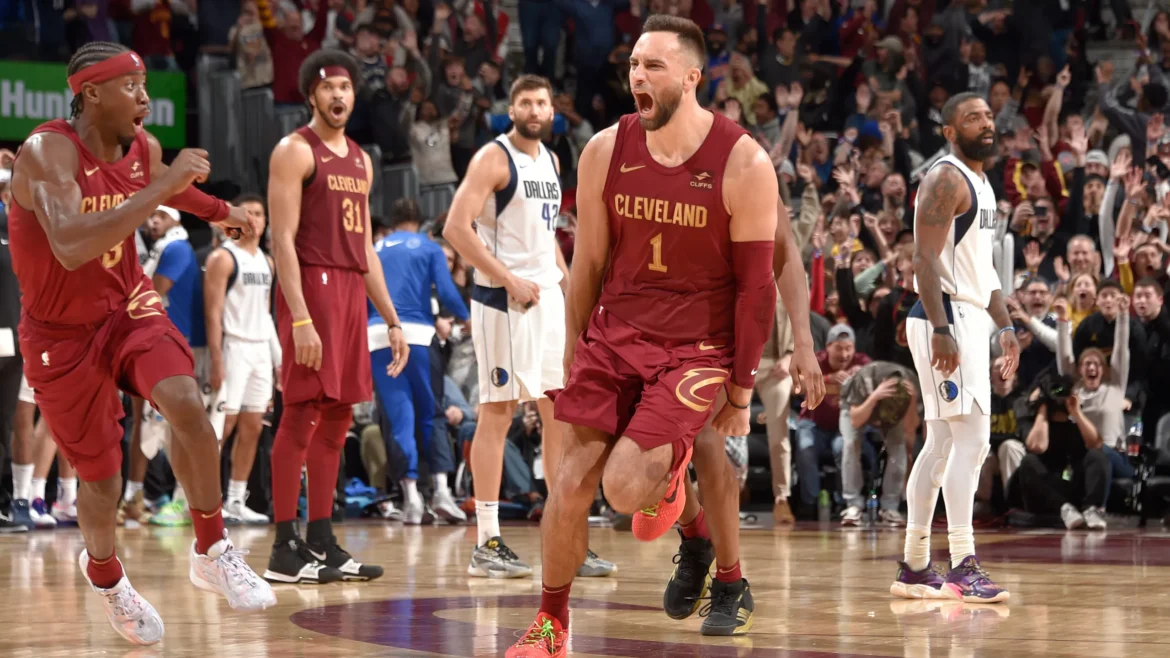
The interconference clash between the Dallas Mavericks vs Cleveland Cavaliers Match Player Stats presented a compelling blend of offensive creativity, defensive structure, and high-level individual performances. Both teams entered the matchup with playoff ambitions, relying heavily on star backcourt production while demanding consistency from their frontcourt and bench units. The game unfolded as a tactical chess match, featuring pick-and-roll precision, perimeter shot-making, interior rim protection, and late-game execution. A deep dive into the player statistics reveals how scoring efficiency, rebounding margins, assist distribution, and turnover control ultimately shaped the outcome of this competitive NBA contest.
First Quarter Pace and Early Scoring Patterns
The opening quarter established a fast-paced rhythm, with Dallas Mavericks vs Cleveland Cavaliers Match Player Stats focusing on spacing and perimeter ball movement, while Cleveland emphasized defensive discipline and structured half-court sets. Luka Dončić quickly asserted himself with 12 first-quarter points, combining step-back three-pointers and driving finishes. Donovan Mitchell countered with 9 early points, attacking closeouts and converting mid-range opportunities. Dallas shot 50 percent from the field in the first quarter, while Cleveland maintained 48 percent efficiency. Rebounding was nearly even, but Cleveland’s early defensive stops prevented Dallas from building a significant lead. The balanced start foreshadowed a tightly contested statistical battle.
Luka Dončić’s Offensive Brilliance
Luka Dončić delivered an exceptional performance, finishing with 36 points, 10 rebounds, Dallas Mavericks vs Cleveland Cavaliers Match Player Stats and 11 assists to record a triple-double. Shooting 13-of-24 from the field and 5-of-9 from three-point range, Dončić demonstrated control over the tempo of the game. His pick-and-roll orchestration created high-percentage opportunities for teammates such as Kyrie Irving and Christian Wood. Dončić’s ability to draw defensive attention resulted in 11 assists, reflecting his playmaking dominance. In the fourth quarter, he added 10 critical points, including a step-back three that shifted momentum in Dallas’ favor.
Kyrie Irving’s Complementary Scoring
Kyrie Irving complemented Dončić with 27 points and 6 assists, showcasing his elite shot creation and finishing ability. Irving shot 11-of-19 from the field and converted multiple contested mid-range shots. His ball-handling allowed Dallas Mavericks vs Cleveland Cavaliers Match Player Stats to maintain offensive rhythm when Dončić rested. Defensively, Irving contributed two steals, creating transition opportunities that extended Dallas’ scoring runs. His late-game composure proved instrumental in converting crucial possessions.
Donovan Mitchell’s Scoring Leadership
Donovan Mitchell led Dallas Mavericks vs Cleveland Cavaliers Match Player Stats with 33 points, 5 assists, and 4 rebounds. Shooting 12-of-23 from the field and 4-of-8 from three-point range, Mitchell demonstrated efficiency and resilience. His aggressive drives forced Dallas into defensive rotations, generating open looks for teammates. Mitchell’s third-quarter surge, where he scored 14 points, briefly gave Cleveland the lead. However, increased defensive pressure from Dallas limited his efficiency in the closing minutes.
Darius Garland’s Playmaking and Efficiency
Darius Garland contributed 22 points and 9 assists, orchestrating Dallas Mavericks vs Cleveland Cavaliers Match Player Stats offensive sets with precision. Garland’s 8-of-16 shooting performance included key three-pointers that kept the Cavaliers competitive. His pick-and-roll chemistry with Jarrett Allen and Evan Mobley created interior scoring opportunities. Garland’s assist-to-turnover ratio highlighted disciplined ball management, although late-game turnovers slightly impacted Cleveland’s comeback attempt.
Frontcourt Battle Jarrett Allen vs Christian Wood
Jarrett Allen recorded 15 points, 12 rebounds, and 2 blocks, anchoring Dallas Mavericks vs Cleveland Cavaliers Match Player Stats interior defense. His rebounding limited Dallas’ second-chance opportunities and provided defensive stability. On the other side, Christian Wood added 18 points and 8 rebounds for Dallas, stretching the floor with perimeter shooting and contributing efficient interior scoring. The frontcourt duel reflected a balance between rim protection and offensive versatility.
Rebounding Statistics and Possession Control
Rebounding proved crucial in determining possession advantages. Dallas Mavericks vs Cleveland Cavaliers Match Player Stats secured 48 total rebounds compared to Cleveland’s 45. Dončić’s 10 rebounds supplemented Wood’s contributions, while Allen and Mobley combined for 20 boards for Cleveland. Offensive rebounding slightly favored Dallas, translating into second-chance points that extended scoring runs in the second and fourth quarters. The narrow rebounding edge reflected the physical nature of the contest.
Bench Contributions and Rotational Impact
Bench production influenced momentum during key stretches. Dallas Mavericks vs Cleveland Cavaliers Match Player Stats received 16 combined points from Tim Hardaway Jr. and Maxi Kleber, providing perimeter shooting and defensive support. Cleveland’s bench, led by Caris LeVert with 14 points, maintained offensive pressure and energy during starter rotations. Rotational adjustments in the third quarter emphasized defensive intensity, resulting in brief scoring droughts for both teams before starters regained control.
Shooting Efficiency Comparison
Dallas finished with a 49 percent field goal percentage, while Cleveland shot 47 percent. Three-point efficiency slightly favored Dallas at 39 percent compared to Cleveland’s 37 percent. Free-throw accuracy was nearly identical, with Dallas converting 18-of-22 attempts and Cleveland making 17-of-21. These marginal differences, particularly in three-point shooting, contributed to Dallas’ slight statistical advantage.
Turnover Margin and Ball Distribution
Turnover control significantly influenced extra possessions. Dallas Mavericks vs Cleveland Cavaliers Match Player Stats committed 11 turnovers, while Cleveland recorded 14, giving the Mavericks additional scoring opportunities. Assist totals were closely matched, with Dallas recording 27 and Cleveland 26, reflecting balanced ball movement. Dončić’s playmaking and Irving’s ball control minimized wasted possessions during critical stretches.
Third Quarter Momentum Shift
The third quarter featured Dallas Mavericks vs Cleveland Cavaliers Match Player Stats strongest surge, fueled by Mitchell’s scoring and Garland’s distribution. However, Dallas responded with improved defensive rotations and efficient perimeter shooting from Irving and Hardaway Jr. The statistical momentum swung multiple times, highlighting the competitive balance between the teams.
Fourth Quarter Clutch Execution
Clutch execution ultimately determined the outcome. In the final five minutes, Dončić scored 8 points, including a decisive three-pointer and a driving finish. Irving added 6 points, converting free throws under pressure. Cleveland attempted to rally behind Mitchell and Garland, but missed perimeter shots and defensive rebounds secured by Wood and Dončić limited their comeback potential. Dallas’ ability to convert high-leverage possessions and maintain defensive composure proved decisive.
Tactical Themes Reflected in Player Stats
The statistical breakdown highlights contrasting strategies. Dallas Mavericks vs Cleveland Cavaliers Match Player Stats relied heavily on backcourt creation and perimeter shooting, leveraging Dončić’s playmaking and Irving’s shot-making. Cleveland emphasized balanced scoring and interior defense anchored by Allen and Mobley. Slight advantages in rebounding, turnover control, and three-point efficiency allowed Dallas to secure the win in a closely contested battle.
Conclusion
The Dallas Mavericks vs Cleveland Cavaliers Match Player Stats matchup exemplifies how elite individual performances combined with disciplined team execution determine outcomes in high-level NBA contests. Luka Dončić’s triple-double and Kyrie Irving’s scoring efficiency anchored Dallas’ offense, while Donovan Mitchell and Darius Garland kept Cleveland competitive with dynamic backcourt production. Marginal advantages in rebounding, turnover control, and clutch shooting ultimately favored the Mavericks. The comprehensive player stats underscore that while star power drives competitiveness, execution in decisive moments, efficient shot selection, and disciplined defensive rotations ultimately define victory in tightly contested games.
You May Also Read: Milwaukee Bucks vs Indiana Pacers Match Player Stats