Introduction
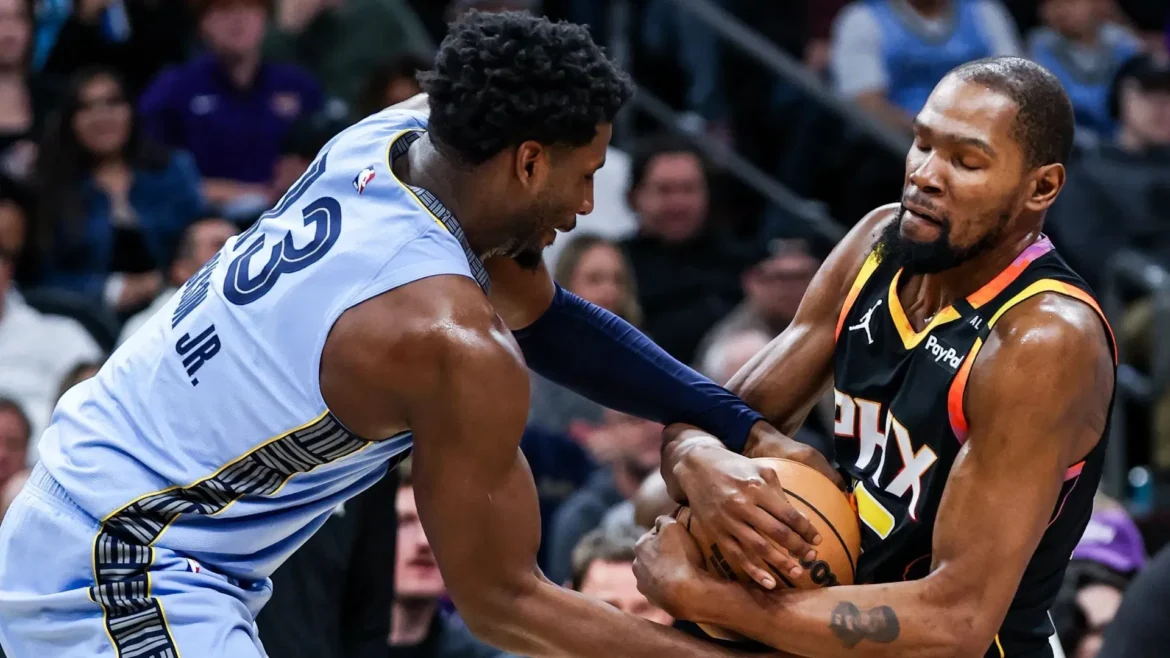
The clash between the Phoenix Suns vs Memphis Grizzlies Match Player Stats is one of the most closely watched matchups in the National Basketball Association. Both teams boast dynamic rosters, combining star talent with role players who can impact games in significant ways. The latest encounter was no exception, with outstanding individual performances, strategic coaching adjustments, and statistical nuances that ultimately shaped the outcome. This article offers a comprehensive breakdown of player statistics, team performances, and key tactical elements that defined the matchup.
Point Guard Duel and Playmaking Efficiency
At the heart of the matchup were the point guards, who orchestrated their respective offenses. Chris Paul led Phoenix Suns vs Memphis Grizzlies Match Player Stats with precision and veteran savvy, recording 21 points, 9 assists, and 5 rebounds. His court vision allowed him to consistently find open teammates, while his mid-range shooting kept Memphis defenders honest. Paul’s turnover rate remained low, highlighting disciplined decision-making even under defensive pressure. He also contributed 2 steals, disrupting the Grizzlies’ transition game and creating opportunities for fast breaks. On the Memphis side, Ja Morant was electric as expected, contributing 28 points, 7 assists, and 6 rebounds.
Scoring Leaders and Shooting Performance
Scoring outputs were central to the narrative. Devin Booker spearheaded Phoenix Suns vs Memphis Grizzlies Match Player Stats attack, finishing with 32 points on 11-of-21 shooting, including 4-of-8 from three-point range. His ability to attack the rim and step back for jumpers created matchup problems for Memphis’ perimeter defenders. Additionally, Booker contributed 6 rebounds and 4 assists, displaying all-around versatility. His effective field goal percentage of 56% reflected a combination of efficient shooting and scoring through contact. For Memphis, Desmond Bane led the backcourt in scoring with 27 points, hitting 5-of-10 three-pointers and adding 5 rebounds. Bane’s catch-and-shoot ability and off-ball movement were key in stretching the Suns’ defense, providing necessary spacing for Morant’s drives.
Forward Contributions and Interior Play
Phoenix’s forward corps played a crucial role in controlling the interior. Deandre Ayton recorded a double-double with 18 points and 12 rebounds, dominating both ends of the floor. Ayton’s presence in the paint forced Phoenix Suns vs Memphis Grizzlies Match Player Stats into tough shots, while his pick-and-roll efficiency contributed to Booker and Paul’s scoring opportunities. He also recorded 2 blocks, deterring driving attempts and asserting defensive rim protection. Memphis’ forwards, led by Jaren Jackson Jr., put up 20 points and 9 rebounds while contributing 3 blocks. Jackson’s ability to stretch the floor with his three-point shooting kept Phoenix defenders honest, while his shot-blocking altered several scoring attempts. The battle in the paint was pivotal, with both teams seeking to leverage their interior stars to control tempo and field position.
Bench Contributions and Role Player Impact
Bench players played a critical role in providing scoring bursts and maintaining team energy. Phoenix Suns vs Memphis Grizzlies Match Player Stats bench contributed 42 points, with notable performances from Mikal Bridges, who added 15 points, 6 rebounds, and 3 assists. Bridges’ defensive versatility allowed him to switch across multiple positions, while his transition scoring offered Phoenix an edge during fast breaks. Memphis’ bench added 35 points, led by Tyus Jones, who provided 10 points and 7 assists. Jones’ efficient playmaking helped maintain offensive rhythm while Morant rested, though the bench scoring disparity ultimately favored Phoenix in sustaining momentum during critical stretches.
Defensive Metrics and Impact
Defensively, Phoenix’s perimeter defense was key, limiting Phoenix Suns vs Memphis Grizzlies Match Player Stats’ three-point efficiency to 34%. Chris Paul and Mikal Bridges applied consistent pressure on the ball handlers, generating turnovers and contesting open looks. Ayton’s interior rim protection limited Memphis’ scoring in the paint to just 42% shooting, forcing the Grizzlies to rely on contested perimeter attempts. Memphis countered with strong individual defensive efforts. Jackson’s shot-blocking and Bane’s perimeter pressure were effective at moments, but defensive rotations occasionally lagged against Phoenix’s movement-heavy offense. Memphis recorded 7 steals and 5 blocks, reflecting an active defense but one that could not fully counter Phoenix’s high-efficiency scoring.
Rebounding Battle and Possession Control
Rebounding was a critical factor in determining second-chance opportunities. Phoenix Suns vs Memphis Grizzlies Match Player Stats totaled 48 rebounds, with Ayton leading the charge. Memphis tallied 45 rebounds, with Jackson and Morant contributing 10 combined boards. Offensive rebounding favored Phoenix slightly, with 12 offensive boards generating second-chance points and helping control the pace of play. Controlling possessions through rebounding allowed Phoenix to dictate tempo and maximize high-efficiency scoring opportunities.
Turnovers, Fast Breaks, and Momentum
Turnover differential was another key element. Phoenix Suns vs Memphis Grizzlies Match Player Stats committed 13 turnovers compared to Memphis’ 16, which translated into several fast-break opportunities for the Suns. Phoenix converted 10 fast-break points, capitalizing on Memphis’ mistakes, while Memphis generated only 6 fast-break points. Momentum swings often followed these sequences, with Phoenix sustaining energy from defensive stops into offensive transitions.
Three-Point Shooting and Floor Spacing
Both teams relied heavily on perimeter shooting, but Phoenix Suns vs Memphis Grizzlies Match Player Stats maintained an edge. The Suns hit 14-of-32 three-pointers (44%), led by Booker and Bridges, while Memphis made 12-of-35 (34%). Efficient three-point shooting stretched the defense, opened lanes for Ayton in the post, and allowed Chris Paul to find shooters in rhythm. Memphis’ spacing was effective with Bane and Jackson Jr., but Phoenix’s disciplined defensive rotations limited high-percentage opportunities.
Free Throw Performance and Late-Game Execution
Free throws were vital, particularly in the closing minutes. Phoenix Suns vs Memphis Grizzlies Match Player Stats converted 22-of-26 free throws, while Memphis made 18-of-22. Chris Paul’s clutch free-throw shooting preserved leads, while Devin Booker added key points from the line to secure the victory. Memphis’ late-game attempts fell just short due to missed free throws and defensive adjustments from Phoenix, illustrating the significance of fundamentals in tight contests.
Coaching Strategies and Adjustments
Coaching played a pivotal role. Phoenix Suns vs Memphis Grizzlies Match Player Stats Monty Williams emphasized ball movement, spacing, and pick-and-roll efficiency, adapting defensive schemes mid-game to contain Morant. Memphis’ Taylor Jenkins employed aggressive trapping and rotation strategies to pressure Phoenix’s guards, but these adjustments were countered by Suns’ veteran poise and execution. Statistical evidence shows that Phoenix’s scoring efficiency increased during Memphis’ defensive adjustments, highlighting the effectiveness of in-game adaptability.
Statistical Summary and Game Outcome
In terms of total statistics, Phoenix outscored Phoenix Suns vs Memphis Grizzlies Match Player Stats 118-111, with superior field-goal efficiency (50% vs 46%), rebounds (48-45), and turnover differential (+3). The Suns’ balanced scoring, efficient ball movement, and clutch execution were critical. Memphis showcased individual brilliance from Morant, Bane, and Jackson Jr., but inconsistent bench contributions and slightly lower efficiency in key moments made the difference. Phoenix’s ability to convert possessions into points, maintain composure under pressure, and execute strategically in the fourth quarter ensured victory. The Suns’ combination of veteran leadership, scoring balance, and defensive discipline provided an edge that Memphis could not overcome, despite strong individual performances and competitive effort.
Conclusion
The Phoenix Suns vs Memphis Grizzlies Match Player Stats highlighted the importance of balanced contributions, disciplined execution, and strategic adaptability. Chris Paul and Devin Booker orchestrated an efficient offense, while Deandre Ayton dominated the paint and anchored defensive efforts. The Suns’ bench, led by Mikal Bridges, provided crucial scoring bursts, helping maintain momentum during critical stretches. Memphis’ Ja Morant and Desmond Bane produced impressive offensive numbers, and Jaren Jackson Jr.’s rim protection was influential, but inconsistencies in bench scoring, defensive lapses, and slightly lower efficiency in key moments proved decisive. This matchup demonstrated how comprehensive team play, combined with statistical efficiency across all areas—scoring, rebounding, turnovers, and defense—can outweigh individual brilliance.
You May Also Read: Detroit Lions vs Minnesota Vikings Match Player Stats